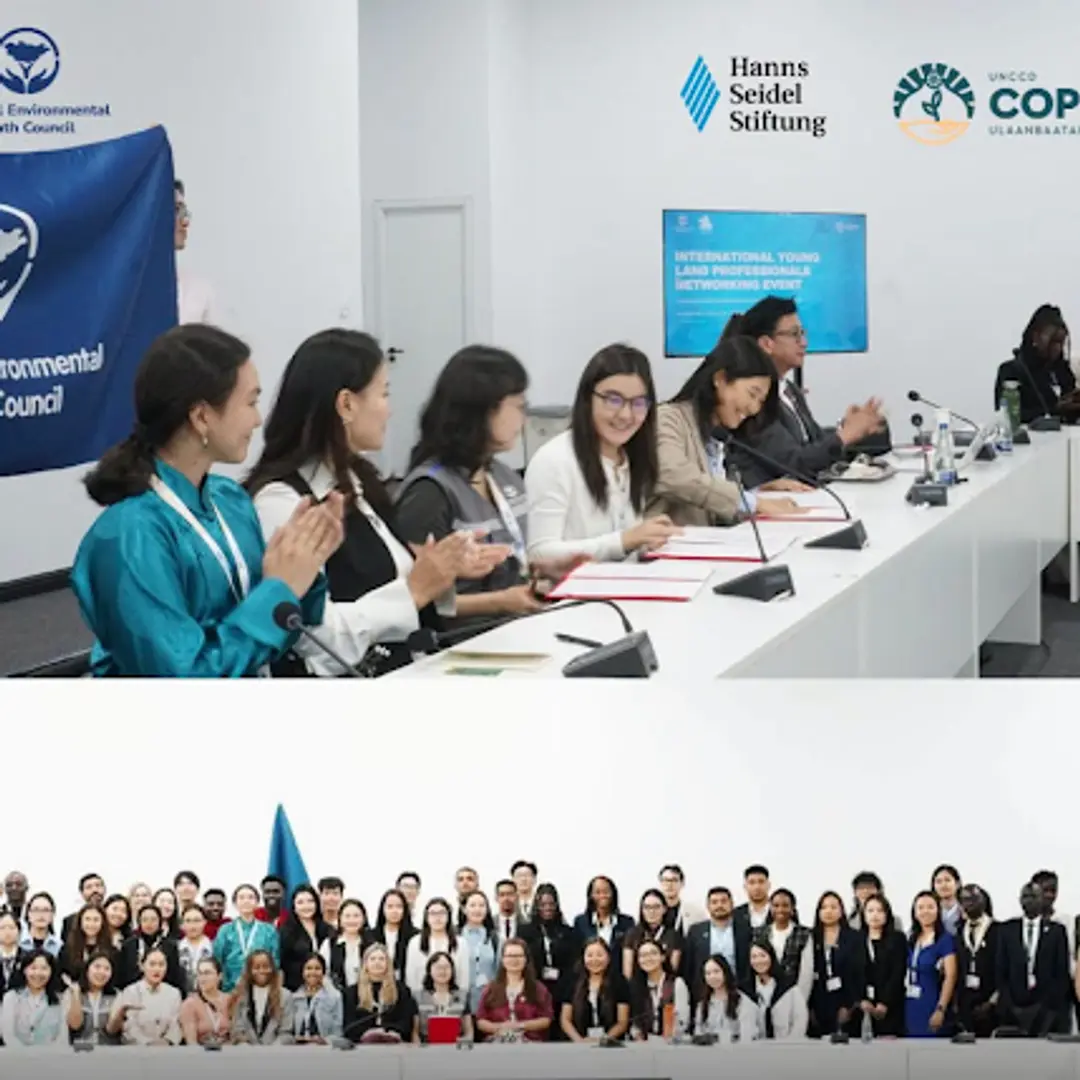
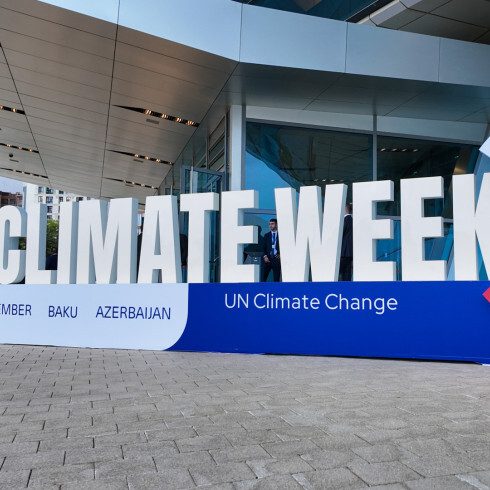
UNFCCC Climate Week 4, hosted by the government of Azerbaijan in Baku from 7-11 September 2026, marked a clear shift for global climate policy. The departure from simply negotiating targets showed that the success of climate action will be defined by converting ambitious targets into concrete policies, investments, and programmes that produce tangible results [1].
Held during the preparation phase for COP31 in Antalya, Türkiye, Climate Week 4 was a pivotal moment for climate diplomacy by setting the tone for upcoming negotiations and creating space to feed practical inputs into the COP decisions [3]. Its programme covered key themes — such as adaptation, just transition, transparency, Nationally Determined Contributions (NDCs), and Action for Climate Empowerment (ACE) — emphasizing these topics as interconnected components of implementation rather than as separate areas of climate policy [2].
From ambition to delivery
As required by the Paris Agreement, countries are to strengthen their climate action through NDCs, adaptation planning, reporting, and international cooperation. The discussions during the peer exchange workshop on NDC implementation revealed that one of the key challenges is the gap between national targets and finance-ready projects [4]. Many parties highlighted that ambitious mitigation and adaptation priorities lack sufficiently developed project pipelines, feasibility studies, financial models and institutional arrangements to attract investment [4]. The Climate Implementation Bridge (BRIDGE) initiative is intended to address this gap by translating national climate and development priorities into projects and connecting them with relevant sources of finance [5]. Its effectiveness will depend on whether it builds on existing national institutions and systems rather than creating a separate international architecture.
On the road to COP31, countries should consider that an effective implementation process requires national alignment in addition to coordinated action by different ministries or international partners. The NDC workshop solidified that climate actions should be mapped in accordance with national development strategies, NDCs, National Adaptation Plans (NAPs), long-term strategies and Biennial Transparency Report (BTR) findings [6]. With emphasis on joint actions by government entities, it highlighted that a shared national finance platform can reduce duplication, improve sequencing and make it easier to determine relevant financial instruments for activities [7]. It can also improve the transparency of climate finance by clarifying whether resources are genuinely additional or simply existing development assistance relabelled as climate finance.
Adaptation finance and the implementation gap
By hosting mandated workshops under the Baku Adaptation Roadmap, Global Goal on Adaptation (GGA), Climate Week 4 offered critical space to tackle implementation challenges regarding adaptation to be addressed in COP31 [8]:
- translation of adaptation commitments into financed, nationally-owned programmes;
- consolidation of multi‑hazard early warning and risk assessment systems;
- systematic integration of local and Indigenous knowledge into national planning instruments.
International public finance can support adaptation by funding feasibility studies and pilot projects, strengthening national institutions, reducing investment risk, and helping successful initiatives move toward larger-scale financing [3]. The Adaptation Fund–CTCN Support for Early Action Programme is a clear example of the benefit of such a function of international public finance. The program supported adaptation pilot projects in different countries dealing with various issues such as early warning, water security, and food systems [9]. The results revealed that even a small amount of technical assistance can increase the capacity of institutions, improve services, and attract more funds for scaling up [3].
Nevertheless, adaptation finance still faces such challenges as fragmented funding streams, data gaps, poor project preparation capacity, and inadequate operations and maintenance support [9]. In this context, COP31 is expected to advance a multi-stage financing architecture under the Adaptation Fund–GCF–CTCN nexus that provides continuous support across the project cycle to ensure pilots’ transition into durable, nationally owned adaptation investments. On this account, the project support is to be coupled with requirements for national budget ownership, common monitoring and evaluation frameworks, and early engagement of women, youth, and local communities [3].
Just transition and industrial transformation
The Sixth Dialogue under the United Arab Emirates Just Transition Work Programme addressed how industrial transformation can be made socially fair and economically inclusive [10].A credible just transition should involve workers, trade unions, local communities, women, youth, Indigenous Peoples, small and medium-sized enterprises and other affected groups throughout the policy cycle [11]. As highlighted during the conference, participation should extend beyond consultation to include involvement in the design, implementation and evaluation of transition policies. The discussions also emphasized that developing countries face different starting points. Late-industrializing economies may require different sequencing, technologies and financial support from countries that have already built high-emission industrial systems [12]. International cooperation must therefore address access to finance, technology transfer, skills development and market opportunities [12].
The proposed Just Transition Mechanism could play an important role if it provides practical support rather than only issuing general guidance. Its functions could include capacity-building, project preparation, coordination of existing initiatives, access to finance and technology, support for social dialogue and assistance with workforce planning [13].
Data-driven climate action for Non-State actors
A special session dedicated to the redevelopment of the UNFCCC’s Non-State Actor Zone for Climate Action (NAZCA) underscored the growing importance of cities, regions, companies, civil society organizations, and cooperative initiatives. A more dynamic and data-based platform could improve the visibility, comparability and accountability of non-state climate action [14]. The proposed platform would allow actors to register targets, report progress, share implementation experiences, and connect voluntary action with Global Stocktake outcomes and national priorities.
For youth organizations, community groups and civil society networks, the platform could provide an opportunity to document locally led initiatives and demonstrate their contribution to national and global climate goals. Reporting should explain how projects were financed, what barriers they encountered, what results they achieved and whether their methods can be replicated [14].
Significance for COP31 and future of global climate governance
Climate Week 4 reinforced several principles that should guide future climate negotiations:
- Climate finance must respond to nationally identified needs.
- Adaptation must be locally led and socially inclusive.
- Technology should be accessible and supported by institutions and skills.
- Just transition policies must protect workers and communities.
- Non-state actors should be recognized not only for making commitments, but also for demonstrating measurable implementation.
The discussions reflected a broader shift from ambition to implementation, from project-based approaches to system-wide transformation, and from consultation to shared decision-making. Climate action was increasingly understood as a whole-of-government and whole-of-society process that must connect national priorities with accessible finance, institutional capacity, locally owned solutions, decent work, and social protection.