Two Crises, One Source: How are Fossil Fuel Lobbyists Delaying the UN Global Plastics Treaty Talks?

The UN Global Plastics Treaty negotiations have faced significant delays since the original target of the end of 2024, following the collapse of the talks that took place in Geneva, in August 2025. One year on, in August 2026, a new “informal reference document” was shared by the negotiations Chair following more closed-door discussions in Nairobi, Kenya. The text disappointingly displays little, if any, progress, and leaves mentions of human health, plastics production, and chemicals up for debate. The progress of this treaty is not just essential to curb the plastic pollution crisis. This article highlights how the Global Plastics Treaty is representative of the state of multilateralism and exposes the paradox of oil and gas lobbying: how they have systematically siloed the plastic and climate crises, only to pivot towards plastics production as they battle declining demand for fossil fuels.

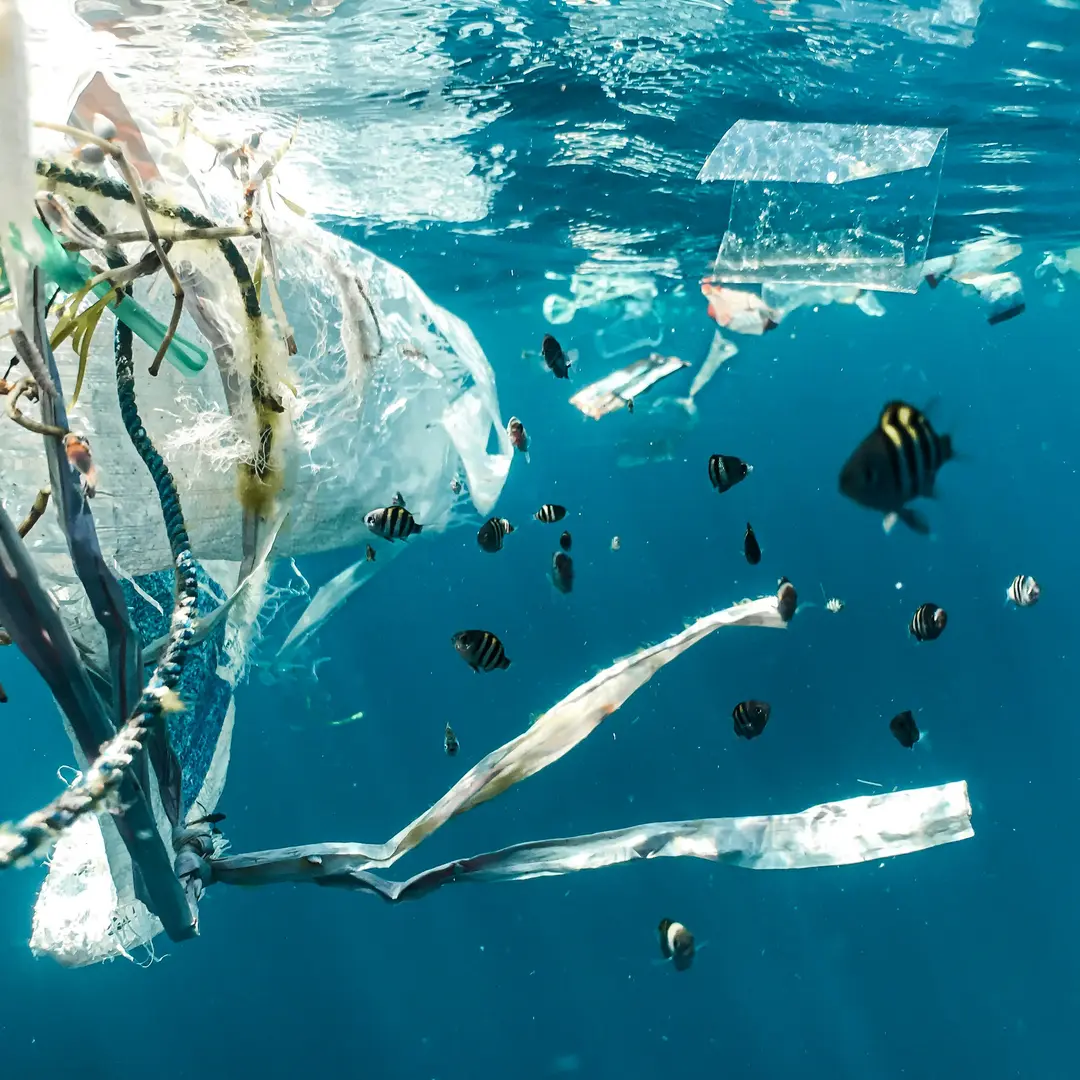
Fish swimming in plastic soup
by Ushika Kidd
7 Oct, 2026

What is the UN Global Plastics Treaty?

The resumed fifth session of the UN Environment Assembly (UNEA-5.2) saw a landmark resolution be adopted to end plastic pollution. The Intergovernmental Negotiation Committee (INC) was convened and tasked with developing an internationally legally binding instrument to address the full life cycle of plastic, from production to disposal, including in the marine environment [1].

Initially, the treaty was to be finalised by the end of 2024 [2]. However, deadlock has stalled progress, with countries divided on whether the treaty should include plastic production in its scope or focus on plastic waste management. The talks collapsed in August 2025 after agreement could not be reached, and in October 2025 the then-Chair, Ecuadorian Ambassador Luis Vayas Valdivieso abruptly resigned [3]. The new Chair, Chilean ambassador to the UN Julio Cordano, took on the position in February 2026 [4]. Since then, the interim process has been distinctly behind closed doors in format, consisting of informal discussions with an unusually long period of 19 months (August 2025 to March 2027) between official negotiations [5]. The second informal Heads of Delegation meeting concluded in Bangkok, Thailand, on 30 September 2026, with large coalitions headed by developing countries to secure an ambitious treaty [6].


Where are we now?

In August 2026, a new informal reference document was shared by the Chair following the informal discussions that took place earlier that month in Nairobi between the Heads of Delegations [7]. This document is specifically not a new draft text of the UN Plastics Treaty, but is instead an “Aid to Negotiations,” according to the Chair. Experts have said that the latest plastic treaty document signals even less ambition than the last, in a process that is already significantly delayed [8].


Challenges facing the Treaty

The disappointing progress is reflected by the fact that the document is largely unchanged from the draft released in August 2025. Indeed, it now has more bracketed text, which signals disagreement among the parties and leaves the content up for discussion. Concerns have been raised particularly about the brackets around mentions of human health, meaning that protecting health from the impact of plastics might be lost from the text altogether, despite substantive evidence as to their toxic impacts [8]. Analysis from the Center for International Environmental Law also reiterated the need for it to address plastics production, which Member States as well as scientific evidence call for the treaty to address [9].

The progress and the outcomes of the treaty appear worryingly fallible to plastics industry and petrostates lobbying. Any degree of faltering ambition, therefore, must continue to be taken seriously. For example, the Executive Director of the United Nations Environment Programme (Unep), Inger Andersen, faced criticism for her statement in 2024 that was perceived to undermine the need for a cap on plastic production: which is the point at which the detrimental impacts of plastics begin, not just from their usage once produced [10].


The role of the fossil fuel industry

Not only is the treaty a portrait of the state of multilateralism – urgent calls to reverse the trend of behind-closed-doors approach to negotiations, which open up opportunities for powerful oil- and plastic-producing interests to derail talks, say it all – but it also reinforces that it is high time to connect the dots between fossil fuel and plastics [5]. In fact, it is just one dot: the raw materials to produce them are the same. Plastics are also not only made from fossil fuels, but made with them [11], a life cycle accounting for around 5% of global greenhouse gas emissions in 2023 [12]. Yet, curbing plastics and fossil fuel production has been strategically decoupled by fossil fuel industry lobbying, diverting plastics regulations away from climate change policy and limiting the Global Plastics Treaty to downstream waste management rather than caps on upstream production [13]. This is a critical gap and also a delay tactic in the treaty negotiations, which has yet to explicitly acknowledge that the plastic life cycle is rooted in fossil fuel extraction [13].

However, as the energy transition reduces demand for fossil fuels, this artificial silo between plastics and fossil fuel production is disintegrating. Plastic production is increasingly viewed as a lifeline market for oil and gas companies [14]; there is an existing complex of global fossil fuel subsidies that plastic production benefits from; and lobbyists have flooded plastics negotiations to stall progress. These moves are unmissable: the fossil fuel industry is the elephant in all of the negotiating rooms [15]. This is a full circle that exposes the fundamental contradictions that should have been in plain sight: the plastic crisis and the climate crisis are inextricable from one another, and all the while, the companies profiting from plastic pollution are being allowed to influence the treaty designed to end it [11, 16].
References

[1] Unep (n.d.). INC Plastic Pollution. Available at: https://www.unep.org/inc-plastic-pollution. Accessed 29 September 2026.
[2] Steen, W. (2026). What is the global plastics treaty? Available at: https://oceangeneration.org/what-is-the-global-plastics-treaty/?gad_source=1&gad_campaignid=12446512474&gbraid=0AAAAACybhyq_pmcXMEivR-7Rk5Y0ls0fF&gclid=CjwKCAjww-3VBhAcEiwAwUUIu3Ixaeux6w6iIyICfBlKPM0IpqJ105cI3CkFTiKrualDqfTwZCz4ZBoC12EQAvD_BwE. Accessed 29 September 2026.
[3] Bryce, E., Krüger, L., Ogembo, B., and McGlone, C. (2025). UN plastics treaty chair to step down with process in turmoil. Available at: https://www.theguardian.com/environment/2025/oct/07/un-plastics-treaty-chair-to-step-down-with-process-in-turmoil. Accessed 29 September 2026.
[4] Unep (2026). New Chair elected to lead negotiations on global plastic pollution treaty. Available at: https://www.unep.org/news-and-stories/press-release/new-chair-elected-lead-negotiations-global-plastic-pollution-treaty. Accessed 29 September 2026.
[5] Bryce, E., Ogembo, B., McGlone, C., and Krüger, L. (2026). As plastic talks move behind closed doors, observers worry. Available at: https://dialogue.earth/en/ocean/as-plastic-talks-move-behind-closed-doors-observers-worry/. Accessed 29 September 2026.
[6] Center for International Environmental Law (2026). Coalitions led by developing countries reject a lowest-common-denominator approach. Available at: https://www.ciel.org/news/plastic-treaty-hods-bangkok/. Accessed 30 September 2026.
[7] Cordano, J. (2026). Explanatory note to the Aid to Negotiations by the Chair of the Intergovernmental Negotiating Committee (INC) to develop an international legally binding instrument on plastic pollution, including in the marine environment. Available at: https://wedocs.unep.org/rest/api/core/bitstreams/b62391c4-5162-4d2c-b2f0-b48a25143eb9/content. Accessed 3 October 2026.
[8] Kidd, U. (2026). UN plastic treaty is going backwards, experts say. Available at: https://www.theguardian.com/environment/2026/aug/13/new-un-plastic-treaty-going-backwards-experts. Accessed 29 September 2026.
[9] Carlini, G. (2026). What to Watch for in the New “No Surprises” Plastics Treaty Draft. Available at: https://www.ciel.org/what-to-watch-no-surprises-plastics-treaty-draft/. Accessed 29 September 2026.
[10] Carrington, D. ‘Total infiltration’: How plastics industry swamped vital global treaty talks. Available at: https://www.theguardian.com/environment/2025/jul/23/total-infiltration-how-plastics-industry-swamped-vital-global-treaty-talks. Accessed 29 September 2026.
[11] Greenpeace UK (2025). What is plastic made of? The fossil fuel link explained. Available at: https://www.greenpeace.org.uk/news/what-is-plastic-made-of-the-fossil-fuel-link-explained/. Accessed 29 September 2026.
[12] Viisainen, V. and Tandon, A. (2024). Five charts: Why a UN plastics treaty matters for climate change. Available at: https://www.carbonbrief.org/five-charts-why-a-un-plastics-treaty-matters-for-climate-change. Accessed 29 September 2026.
[13] Steadman, S. (2025). Life in plastic’s not fantastic: why the Global Plastics Treaty must tackle fossil fuel-based production and subsidies. Available at: https://odi.org/en/insights/life-in-plastics-not-fantastic-why-the-global-plastics-treaty-must-tackle-fossil-fuel-based-production-and-subsidies/. Accessed 29 September 2026.
[14] Beltran, P. (2026). Why Plastics Have Overtaken the Planet. Available at: https://insideclimatenews.org/news/18072026/why-plastics-have-overtaken-the-planet/. Accessed 29 September 2026.
[15] King, S. (2025). Still no Plastics Treaty: How the fossil fuel industry keeps polluting negotiations. Available at: https://www.greenpeace.org/international/story/78037/still-no-plastics-treaty-how-the-fossil-fuel-industry-keeps-polluting-negotiations/. Accessed 29 September 2026.
[16] Greenpeace (2025). Plastics, Profits & Power: How petrochemical companies are derailing the Global Plastics Treaty. Available at: https://www.greenpeace.org.uk/wp-content/uploads/2025/07/Plastics-Profits-and-Power-report.pdf. Accessed 29 September 2026.

Related Articles

A look into UNFCCC Climate Week 4: From Ambition to Implementation on the way to COP31
GUEST FEATURE: Beyond the Party Badge: Youth at UNCCD COP17
Climate And Security in the Pacific: The Australia-Tuvalu Falepili Union Deal
The Price of Climate Diplomacy: Why the UNFCCC Funding Crisis Matters
No results found.