
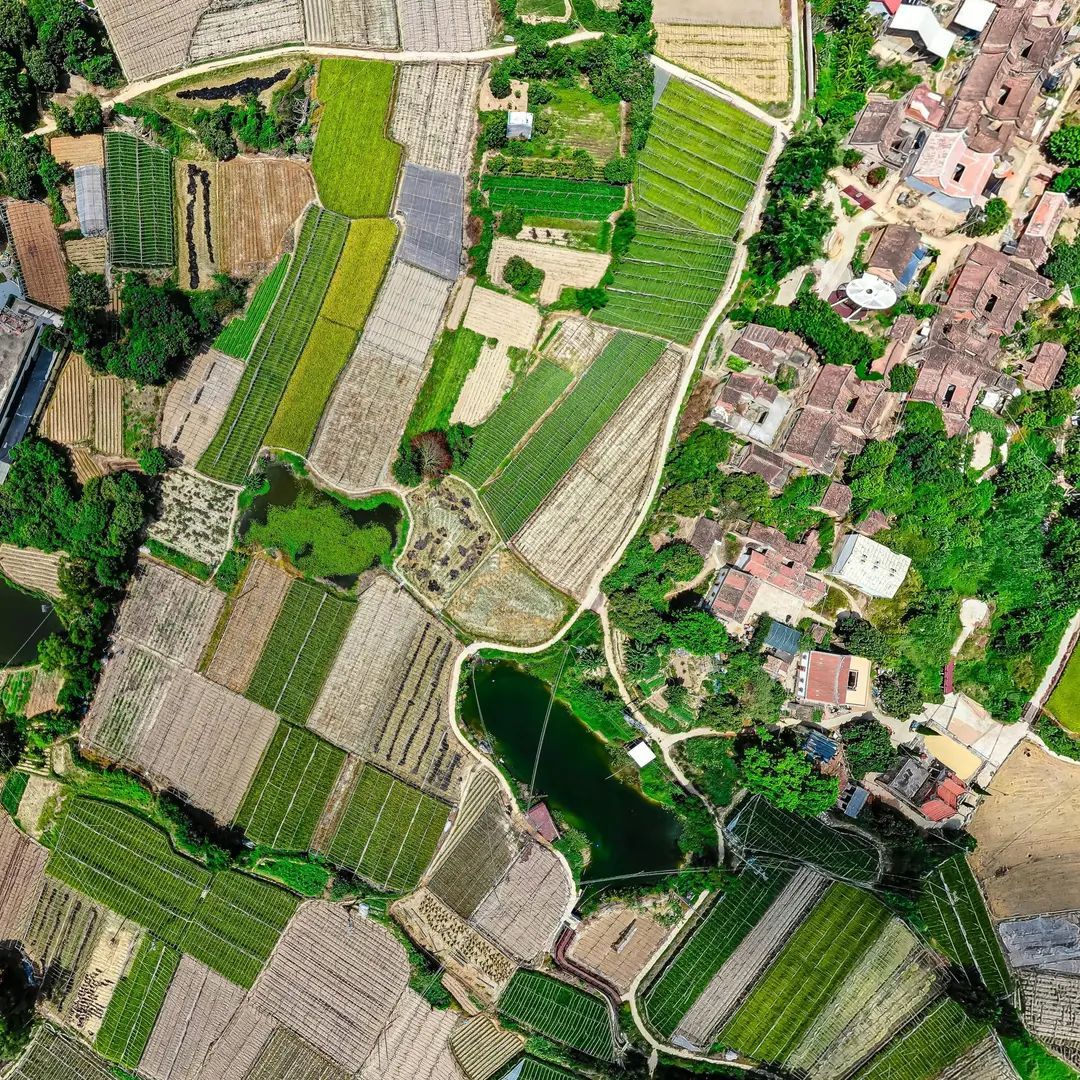
Land use refers to how land is allocated and managed for agriculture, infrastructure, conservation, and human settlement. At its core lies land use governance: the systems of institutions, policies, and power relations that determine who can access land, how it is used, and whose interests are prioritized [1]. In the era of a polycrisis, land governance has become a keen lever shaping both emissions pathways and societal resilience.
Diverse Land Governance Systems and Emerging Trade-offs
Globally, land governance operates through diverse and often overlapping systems. In high-income countries, formal regulatory frameworks dominate. The emerging land use framework in England illustrates this approach, seeking to balance competing demands–food production, climate mitigation, biodiversity restoration, and housing–within a coordinated planning system [2]. Such frameworks offer clarity and strategic direction, but they also reveal governance tensions: how to prioritize land uses under scarcity, and how to align national ambitions with local realities. Conversely, many low- and middle-income countries operate under pluralistic systems where statutory and customary institutions coexist. Customary governance, often administered by traditional authorities, remains central to land allocation and dispute resolution. These systems are locally embedded, flexible, and relatively low-cost. However, they are not inherently equitable. Access to land is frequently shaped by social hierarchies, with women, migrants, and youth facing restricted or insecure rights. This inequality has tangible consequences: limited access to land reduces investment incentives, constrains productivity, and undermines adaptive capacity in the face of the climate crisis [1,2 3].
Inequality, Power, and Postcolonial Legacies in Land Access
Efforts to formalise land governance have produced mixed outcomes. Large-scale land registration reforms in countries such as Rwanda, eastern Democratic Republic of Congo, northern Uganda, southwestern Côte d’Ivoire, and Senegal demonstrate the potential benefits of integrating customary and statutory systems. By documenting land rights and improving tenure security, such reforms can stimulate investment, enhance the functioning of land markets, and strengthen women’s economic position. High costs, bureaucratic barriers, and uneven institutional capacity often limit access to formal systems, reinforcing existing inequalities rather than resolving them [1,4].
Postcolonial legacies continue to shape these dynamics. Colonial land policies frequently centralised control and disregarded Indigenous tenure systems, creating enduring tensions between formal law and lived practice [5]. Today, these tensions manifest in overlapping claims and governance fragmentation. In contexts such as Ghana or Tanzania, large-scale land acquisitions for agriculture, mining, or renewable energy have intensified conflicts between customary users and state-backed investors [6]. Without clear and enforceable rights, local communities remain vulnerable to dispossession.
Gender inequality is a particularly persistent feature of land governance. In many regions, women’s land rights are mediated through male relatives, limiting their autonomy and economic opportunities. Evidence shows that when women gain secure land rights, outcomes improve across multiple dimensions, including agricultural productivity, household welfare, and resilience to climate risks. However, legal recognition alone is insufficient. Effective land governance requires enforcement mechanisms and broader social change to address inherently embedded norms [7].
Land Governance in the Climate Crisis: From Institutions to Implementation
The climate crisis amplifies the importance of effective land governance. Land systems are central to both mitigation through carbon storage and avoiding deforestation, and adaptation, by determining where and how people live and produce [1,2,3]. Technological innovations are increasingly being integrated into governance systems. For example, satellite monitoring has been used to track deforestation and enforce land-use regulations, demonstrating how data can enhance transparency and accountability. At the same time, weak governance continues to drive environmentally harmful outcomes. In rapidly urbanising regions, informal settlements often expand into flood-prone or ecologically fragile areas, increasing vulnerability to climate hazards [1]. Conceptually, land governance is also evolving. Recent research emphasises the need for integrated, multi-level land governance approaches that link local practices with national and global sustainability goals. This includes recognizing the role of diverse actors and the power relations between them. It also highlights the importance of addressing structural inequalities, including those rooted in colonial histories and social exclusion [8,9]. Effective land governance requires sound policies as well as financial and institutional means to enforce them. Decisions about land use reflect competing interests, values, and visions of development during an important time of species loss and climate crisis.