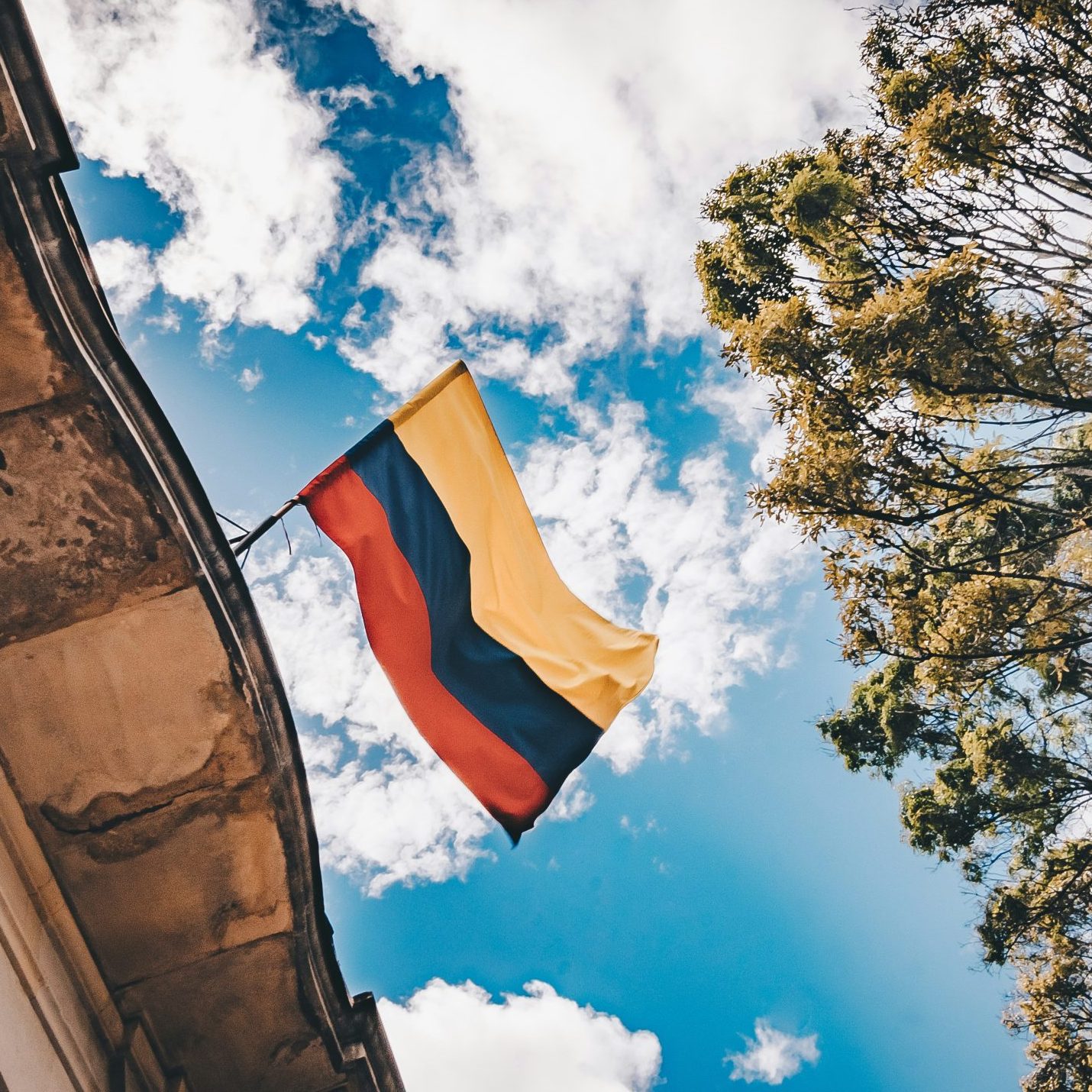
The Santa Marta Conference on Transitioning away from Fossil Fuels comes at a particularly timely moment. Renewed conflict in the Middle East has disrupted the passage of oil through the Strait of Hormuz, exposing the vulnerability of global energy markets and leading to huge spikes in oil prices. Announced at the end of COP30 in Belem, the conference is intended to develop the much-awaited “roadmap” to transition away from fossil fuels, providing practical, financial, and legal mechanisms to speed up a permanent international shift away from oil, coal and fossil gas [1, 2].
Between the 24th and 27th of April, key stakeholder dialogues were held – starting with an Academic Dialogue and an Intercultural Dialogue of Indigenous Peoples, and featuring extensive Private Sector and Unions Chapter events.
The lengthy programme of panels and roundtables will conclude with a People’s Assembly on Day 4 of the Conference before the High-Level Segment on 28th and 29th April [4]. This is the point when national representatives will deliver their statements, either on behalf of their nation or a group of countries allied together. A separate civil-society-led “People’s Summit for a Fossil Free Future” is taking place from 24th to 26th April [3].
The Journey to Phase-Out Fossil Fuels
One key success of COP28, held in Dubai in 2023, was Parties agreeing on the first Global Stocktake – a document which committed all countries to support a “transition away from fossil fuels” [5]. However, the following year’s COP29 in Azerbaijan saw negotiations stall, with Parties split on how to implement this transition [5]. Hopes were high that COP30 would be more productive, but even as Brazil’s President Lula called for “maps of the path” and a global roadmap to “overcome dependence on fossil fuels”, once again, major petrostates blocked any meaningful discussion of a roadmap away from fossil fuel dependency [6,7]. As COP30 drew to a close, the final package of outcome documents – known as the “global mutirão” contained no new roadmap or binding plan to transition away from fossil fuels, only referring back to the earlier “UAE Consensus” from COP28 [8].
Shortly after the COP30 presidency released a draft decision text that made no mention of fossil fuels – despite more than 80 governments calling for a roadmap to phase them out – a press conference announced that the First Conference on Transitioning Away from Fossil Fuels would be held in Santa Marta, Colombia, in April 2026, co-hosted by the governments of Colombia and the Netherlands. At the same event, 24 countries signed a new “Belém Declaration on the Just Transition Away from Fossil Fuels” calling for real action to operationalise the transition and notably backed by fossil fuel producer Australia [8, 9]. The roadmap is planned to be further developed as part of a presidency initiative. Meanwhile, the Santa Marta conference was described in the press conference as a way to build on that momentum outside of the UNFCCC and the constraints of the consensus-based COP process [9, 10].
Many of the countries supporting the declaration and the roadmap, who pledged to work together to transition away from fossil fuels, will be in attendance at Santa Marta this week. As of April 22nd, the Colombian Environmental Minister, Irene Vélez Torres, has confirmed the attendance of around 60 countries [11].
The Fossil Fuel Treaty Initiative
One key alliance that will push for an ambitious outcome at the Santa Marta Conference is the Fossil Fuel Treaty Initiative (FFTI), a coalition that includes a range of civil society organisations, municipal governments, and eighteen countries [12]. The FFTI is seeking a “new, binding legal instrument” – a treaty designed to go further than the Paris Agreement in explicitly addressing the transition away from fossil fuel [12]. It aims to leave Santa Marta with the mandate to establish formal negotiations for a Fossil Fuel Treaty within one year.
If nation states signed such a treaty, they would most likely be expected not only to block any expansion of their national fossil fuel industries, but also to demonstrate commitments to gradually reducing the scale of production in favour of clean energy.
In July 2025, the International Court of Justice (ICJ) confirmed that all 198 UNFCCC signatory states had “binding obligations” not only to take action for the “mitigation of greenhouse gas emissions” but to cooperate to do so [13]. As this is a “continuing duty”, the ICJ found that states failing to meet their obligations could face consequences under international law, potentially including payment of reparations.. In theory, these payments could support the global energy transition.
Likely Outcomes of Santa Marta
This conference doesn’t aim to conclude with a legally binding treaty blocking the expansion of national fossil fuel production. The presence of Australia – among other major fossil fuel exporters – could affect how ambitious a fossil fuel roadmap can be, even if key producer countries are absent. Australia is the world’s third largest fossil fuel exporter based on energy content, and the country’s Prime Minister – Anthony Albanese – continues to approve fossil fuel projects. In the past four years alone, 36 new, expanded or extended projects have been approved. approved [11, 14]. That said, these countries’ perspectives can still inform practical discussions on implementation, and recognising the need for a fossil fuel phase-out is a vital first step.
Regardless of the outcome, the fact this conference happened at all may have significant implications for the future of the global climate regime. Hosting governments Colombia and the Netherlands stressed that this conference is not intended to overshadow or compete with COP31 – but rather to exist as a complementary, parallel process. It is expected that this conference will conclude with an informal proposal for the roadmap, to be presented during negotiations on the topic at COP31 [11, 5]. The primary outcome will be a “Co-Hosts’ Report”, a “consolidated roadmap … designed to inform the COP30 Presidency’s roadmap under the UNFCCC” [15].
This could be the beginning of a new era in global climate policy, where like-minded states convene outside of the UNFCCC infrastructure to influence its decisions, or at least accelerate its process. The “ministerial-level gathering” that will take place between April 28th and 29th has been recognised in some official documents as a way to bypass “traditional multilateral gridlock” [15]. Pacific countries have already committed to holding a follow-up summit focused on implementation of the outcomes agreed on in Santa Marta [16]. If this new kind of intergovernmental cooperation becomes the norm – what Torres called a “coalition of the willing”, and what is increasingly being termed a “coalition of doers” – it could mean a more efficient global climate diplomacy process [9].
At the very least, the conference – whose attendance list has already almost doubled in size since the end of COP30 – has already fulfilled one of its primary goals: to build momentum [9,1]. If this international, widespread enthusiasm for practical action on the transition away from fossil fuels can be sustained through Bonn and into Türkiye, COP31 could be the conference where parties make real progress.