
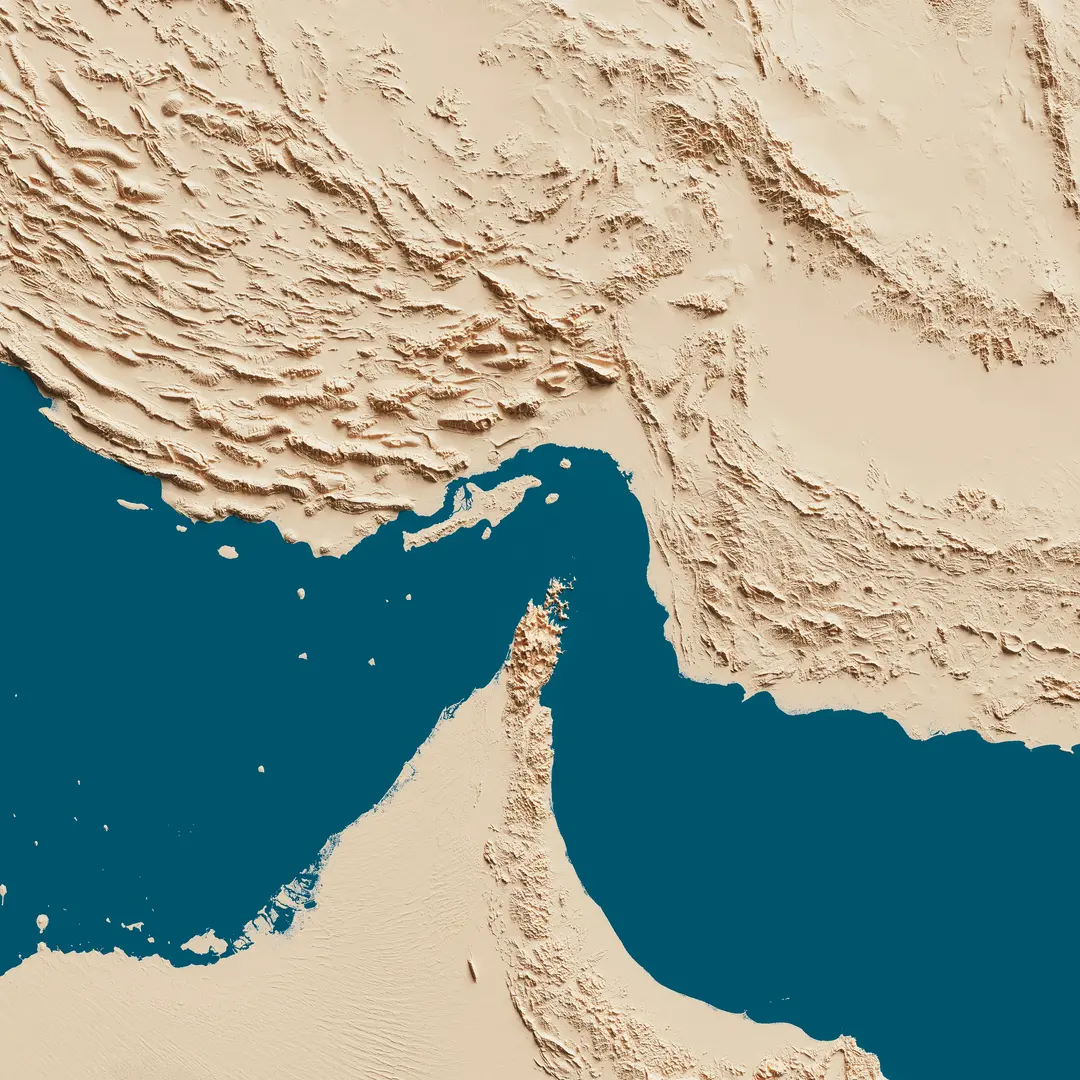
The conflict between the US, Israel, and Iran that led to the blockade of the Strait of Hormuz caused one of the “greatest threats to global energy security in history” [1]. As a strategic trade route for oil and gas was closed, energy prices skyrocketed, resulting in an energy crisis that was felt globally [2].
Reportedly, a fifth of the world’s shipments of oil and gas pass through the Strait of Hormuz, which was closed on the 4th of March 2026 [3]. Traders estimate that around 12 million barrels of oil have been removed from global markets daily as a result of the conflict [4]. Whilst a few shipments have successfully passed through the waterway, Iran has maintained that the strait would not reopen any time soon [5]. The aftershocks of the blockade impacted all aspects of modern life, from increasing fuel costs to more expensive groceries and higher interest rates. Whilst global energy systems are becoming increasingly interdependent and connected, the shock was felt most acutely in countries with limited oil reserves and high dependence on imports [6]. In Vietnam, airlines prepared to cut almost a third of domestic operations due to jet fuel shortages [7]. In Kenya, extortionate fuel costs resulted in increased public transport prices, nationwide protests, and violent police responses [8].
The global oil and gas market will need time to recover from this crisis, forcing governments to look for alternatives to relying on fossil fuels. But UN Secretary-General António Guterres said it best: “Every new fossil fuel project approved today makes tomorrow’s heatwaves more dangerous, and our world less secure” [9].
Researchers estimate that in less than fourteen days of war, more than 5 million tonnes of CO2 were emitted as a direct result of the military operations deployed during the Iran-US-Israel conflict, which is equivalent to roughly 1.1 million petrol cars [10]. Whilst the world is racing towards net zero targets that tackle different sectors, industries, and individual behaviour, war is often left out of the discussion despite having a significant carbon footprint.
Some have taken advantage of the crisis to reignite support for oil and gas projects. The eight largest oil companies around the world have reportedly accumulated over $90bn in profits as a result of the spike in prices caused by the conflict [11]. Immediate government reactions hinted towards a roadblock in decarbonisation plans, where countries such as Germany, Canada, and the US reacted with reduced taxes on fuels and relaxed coal phase-out dates [12]. Short-term responses like fuel subsidies or cutting carbon taxes were broadly favoured over changing consumption behaviour or cost incentives for electrification. Many of these measures were adopted in the name of security and efficiency to mitigate negative impacts. The World Economic Forum’s Energy Transition Index 2026 demonstrated that geopolitical tensions emerged as the primary indicator of the readiness of global energy systems, highlighting that energy security is a core tenet of a successful energy transition [13].
Studies on government reactions to the crisis have shown that whilst short-term responses focused on alleviating price shocks and continuing the use of fossil fuels, long-term plans have shifted towards accelerating renewable deployment and grid expansion to support electrification [12]. The price of renewables has fallen and stabilised considerably in comparison to oil and gas prices, which are increasingly exposed to geopolitical shocks [12]. This marks a positive note for the energy transition, where clean energy is becoming synonymous with resilience and risk mitigation.
The clean energy sector has matured to the point where electrification of end-uses is growing, and renewables are scaling rapidly. Previous global commitments to triple renewables and double energy efficiency by 2030 have been augmented by a new pledge from COP31 President Murat Kurum (Türkiye’s Minister of Environment, Urbanisation and Climate Change), who is bringing a new pledge of 35% global electrification of end-uses by 2035 [14].
The European Union published its Electrification Action Plan in July 2026, aiming to become the first electro-powered continent by reducing electricity costs, strengthening the carbon market, and incentivising investment in electrification [15]. Other countries introduced more structurally transformative policies, with Indonesia announcing ambitious plans to convert its diesel-powered plants to solar power and Lao PDR (Laos) launching plans to remove structural barriers to electric vehicles by lowering taxes and fees, promoting charging infrastructure, and suspending imports of fossil-fuelled cars [16]. Whilst immediate responses to the oil crisis generated scepticism for the energy transition, many countries have pledged long-term targets that are driving momentum towards a cleaner future.
Figure 1: Energy security policies lead to lower global emissions in 2040. Energy Transition Outlook 2025, DNV [17].
Global forecasts show that energy security policies naturally result in lower emissions over time [17]. The oil crisis has exposed the reality that the energy transition is not just about climate or welfare benefits, but also about security in an increasingly unstable world. Whilst this war created a temporary lapse in political will for the energy transition, the case for a cleaner energy system has never been stronger.


