As a foundation, the Belém Declaration on Global Green Industrialization launched on November 14, 2025, at COP30 provided a framework to scale clean energy, transform industries and drive economic growth [1]. While industrial manufacturing and broader industrial activities account for roughly 25% of global greenhouse gas emissions [2], dialogues on industrial transformation cannot treat all industries as a single block as they vary vastly in economic use, chemical structure and thermal requirements.
Why is heavy industry hard to abate?
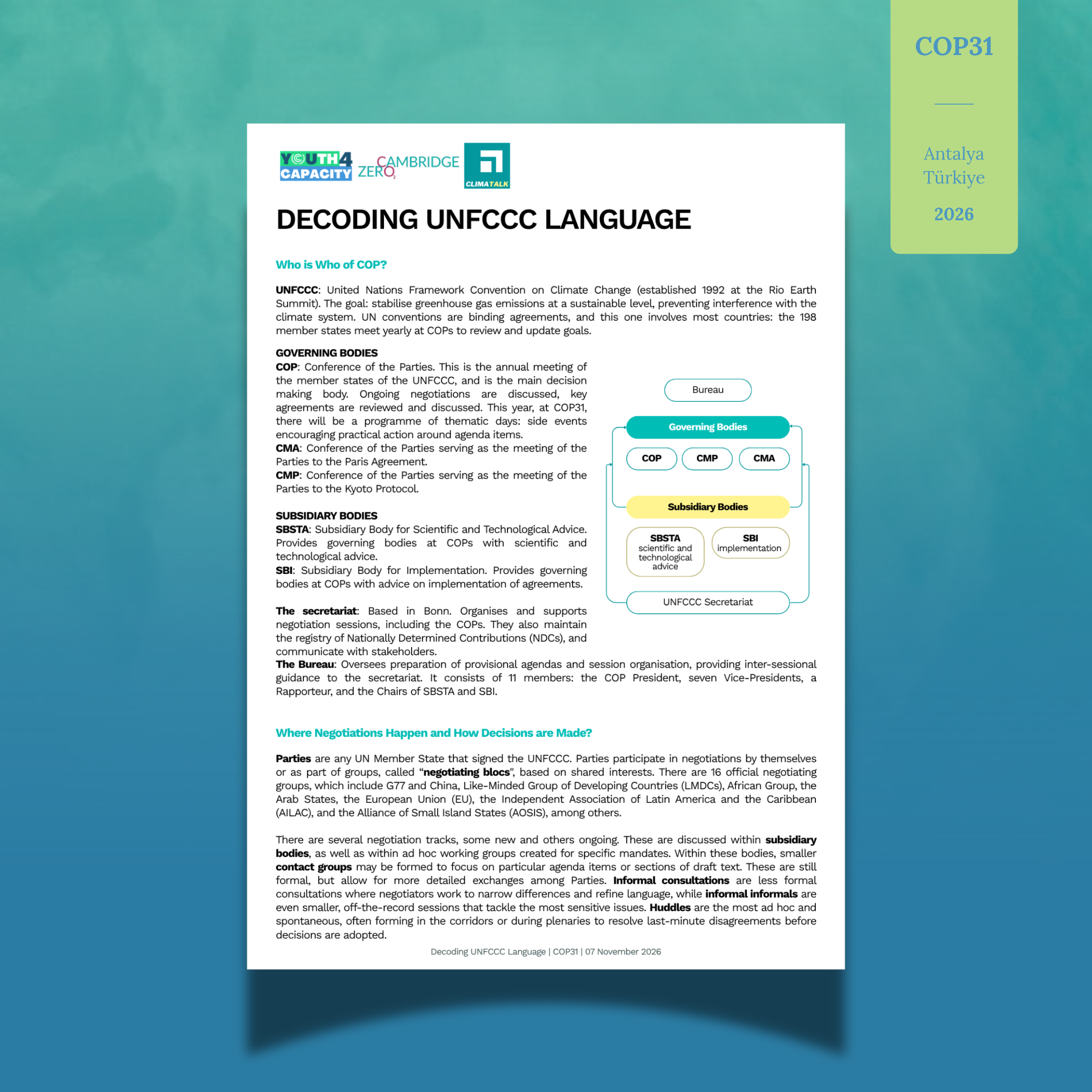
Heavy industries — including steel, cement, chemicals, aluminium and fertilisers — are hard to abate for two structural reasons: extreme high-temperature heat and fundamental chemical process emissions [3]. As such, they cannot easily be decarbonized by renewable energy alone.
Cement production is inherently carbon intensive as its use of heated limestone releases CO₂. While clean energy can power the factory’s heat, it cannot change the fundamental law of chemistry in cement production. Factories can only attempt to trap the gas using carbon capture technology before it escapes into the atmosphere or use alternative raw materials instead of limestone. Refining and extracting aluminium requires extreme temperatures of up to 1,000°C and the infrastructure requires an uninterrupted supply of electricity, which is a heavy burden for electricity grids [4]. Steel production with traditional blast furnaces requires coal as a reducing agent to strip oxygen from iron ore, releasing large amounts of CO₂. Fertilizer production requires the use of fossil gas to extract hydrogen, which is combined with nitrogen to create ammonia. In all cases, switching to renewable energy electricity alone is insufficient to offset the emissions from these fundamental chemical reactions; decarbonization requires shifting to entirely new chemical processes, such as using green hydrogen as the chemical input.
Because heavy industrial assets routinely represent hundreds of millions of dollars in capital, and remain in operation for up to half a century, the timeline to deploy these solutions is restricted. If a blast furnace or cement kiln is built or modernized today with fossil-based technology, its emissions will be unchanging up to 2050 and beyond, highlighting why interventions must target the specific engineering traits of each sector immediately.
Proposed focus areas for green industrialization dialogues
To achieve the goal of rewiring the global economy and transforming industries, the COP31 Presidency has proposed five core focus areas for dialogue. Instead of treating green industrialization as an abstract goal, these areas provide a structured blueprint to address the limitation of existing decarbonization strategies, policies, finance, and demand.
- International Cooperation and Technology Transfer: Progress in green industrialization is stalled by the fragmented perspectives among countries, with developing countries frequently facing barriers to accessing clean technology. This focus area will map out existing mechanisms for cooperation, like the Green Industrialization Facilitation Mechanism for Least-Developed Countries (LDC-GIF) to understand the technology and technical expertise needed by developing nations for industrial transformation.
- Country-Led Industrial Decarbonisation Hubs: The COP31 Presidency is championing localized decarbonisation hubs for individual countries to transform their own heavy and hard-to-abate sectors in line with their specific national plans. Country-led initiatives preserve domestic economic sovereignty and leverage the local economic strengths, energy grids, and the varying resources of countries.
- Market Creation for Low-Carbon Products through Public Procurement and Standards: Several green technologies and low-carbon goods are currently still more expensive than heavy-polluting alternatives. This is referred to as the “green premium”. Green public procurement commits governments to buying low-carbon steel or concrete for infrastructure and to establish unified international standards, creating an immediate, reliable market. Guaranteed demand de-risks private investments and allows sustainable manufacturing plants to scale up rapidly.
- Scaling Near-Zero Emission Technologies: Lab-proven green technologies often stall before reaching mass manufacturing scale due to a lack of commercialization funding — a phase known as the “valley of death”. To combat this, the action agenda introduces the Climate Implementation Bridge, a mechanism intended to turn vague national climate promises into concrete, bankable investment projects. Actively pulling near-zero technologies such as green hydrogen and advanced industrial electrification into the commercial sector can potentially scale deployment, reduce production costs, and trigger a swift downward trend in global industrial emissions.
- Circularity Across Value Chains: Circularity is a core pillar of the COP31 framework. The Presidency has anchored this proposal with a concrete target: increasing the global circular material use rate to at least 15% by 2035. By integrating circularity across value chains, industries can minimize waste, lower reliance on raw material extraction, and significantly scale down methane and carbon footprints across the entire manufacturing lifecycle.
The starting point for discussions in Antalya
Rather than proposing new frameworks at Antalya, existing initiatives should be reviewed, renegotiated, scaled and effectively operationalized as a starting point to create standardized and mutually beneficial measures for industrial transformation. At COP29, the Industrial Deep Decarbonization Initiative (IDDI) which coordinates public procurement and the First Movers Coalition (FMC) — which pushes the private sector to buy green steel, aluminum, and shipping services — launched a joint call to action to scale up global demand for decarbonized materials. To ensure that “green” means the same thing across international borders, the IDDI released the Definitions Landscape Report to set a consistent low-emission thresholds for steel, cement, and concrete [5]. As a result, the standards and tracking tools developed by the IDDI/FMC are increasingly being utilized by emerging economies to align domestic industries and trade with international carbon-accounting standards [6].
Crucially, these coordinated green procurement pledges intersect with trade mechanisms like the EU’s Carbon Border Adjustment Mechanism (CBAM). As the CBAM enters its definitive phase, it has become a point of geopolitical friction. Developing countries have contended that these trade measures act as unilateral, protectionist trade barriers rather than climate action initiatives — penalizing developing countries for historical emissions they did not cause and choking their industrial development with steep carbon tariffs. Türkiye is itself a significant industrial exporter to the EU, and is best placed to facilitate consensus that delivers on the Presidency’s own language of economic competitiveness.
The advancement of Green Industrialization as a key action agenda may hinge on the Presidency providing visibility into these issues and presenting a draft framework to level the playing field within the industry.
What could COP31 realistically deliver?
The desired outcomes of COP31 on Green Industrialization are met with two major structural issues: the first is that trade is not a formal UNFCCC negotiating item and the WTO holds the jurisdiction over trade, making any text penalizing carbon tariffs or any attempt to rewrite global trade rules difficult to legislate. The second issue is that climate agreements are not legally binding and Antalya cannot enforce domestic compliance to meet their green manufacturing targets [7]. Despite these guardrails, COP31 can still achieve meaningful progress through consensus, diplomatic and economic paths.
While the COP31 Presidency cannot ban tariffs, it can push for local economy investments in developing countries. It can also negotiate exemption, mutual recognition and compliance credits, that satisfy both developing and developed countries. For example, developing countries can secure terms where a portion of their carbon taxes are funneled back into their domestic green transition funds. Countries can also make their public procurement commitments through blocks and coalitions toward the use of near-zero emissions, creating a predictable demand that forces private capital flow into industrial decarbonization.