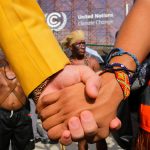

COP30 has been celebrated for its progress on climate finance. The recent UN climate negotiations held in Belem, Brazil, saw calls for a threefold increase in adaptation finance by 2035 and the opening of the Fund for Responding to Loss and Damage (FRLD), with $250 million USD in grants available to support response efforts to climate-related events in developing countries [1, 2].
However, the contributions agreed fall far short of what is needed. The World Bank estimated that the damage caused to Jamaica by Hurricane Melissa in October this year totalled $8.8 billion USD, more than ten times the total value of the current loss and damage fund [3,4]. The cost of implementing loss and damage responses is estimated at $724 billion USD annually [5].
Yet, when developing countries bring this to the table, emphasising the gap between funding provision and requirements, one sentiment from developed countries is clear: We are being charitable. You are lucky to receive anything at all.
At COP30, developing countries fought back. Pacific Island States led the call to change the language and perception of climate finance, emphasising one phrase above all: ‘Climate finance is not charity.’
‘Climate finance is not charity. It is a legal and moral obligation, grounded in responsibility and capacity.’
Minister of Climate Change of Vanuatu, Hon. Ralph Regenvanu [6].
A key principle of climate justice recognises the historical responsibility of developed countries for their climate change emissions, the legacies of colonialism, and their resource extraction and exploitation, which have collectively given developed countries an economic advantage that they continue to profit from today [7].
The first pledge by a developed country for loss and damage was made by the Scottish Government in November 2021, coinciding with COP26 [8]. The then Scottish First Minister, Nicola Sturgeon, said that the pledge should be seen ‘not as an act of charity, but as an act of reparation’ for the UK’s historic contribution to climate change [8].
However, other developed countries have completely rejected the possibility of reparations. John Kerry, the U.S. special envoy on climate change under Obama, said that ‘under no circumstances’ would it pay reparations, while then Prime Minister Rishi Sunak said ‘reparations’ were ‘not on the table’ at COP27 [9, 10]
Notably, however, the conversation around climate finance at COP30, led by Pacific Island States, has not focused solely on this historic responsibility but also emphasises the current and ongoing responsibility of developed nations for climate change. Reparations are paid out following historical events, the damages of which may and often have consequences to this day. Yet, the contribution of developed countries to climate change is still significant, especially when compared to that of Pacific Island nations.
In 2022, US emissions were nearly eight times higher per capita than those of Fiji, the largest Pacific island nation, and more than 20 times higher per capita than those of Vanuatu [11].
Each day, the US emits 60 times more carbon into the atmosphere than Vanuatu does each year [11].
Jasmima Sabatina, the contact point for Loss and Damage at YOUNGO, said to ClimaTalk: ‘The mood this year at COP30 felt like a mix. Many vulnerable countries still see loss and damage as a type of reparation. But big emitters avoid the word “reparations”. So, emotionally, there is frustration, but diplomatically, people are trying to stay practical.’
Climate finance is not charity, nor is it simply reparations for historic inequality. It is grounded in the ongoing responsibility of states for their current emissions and their current capacity for action.
‘Climate finance is not charity, it’s smart economics.’
UN Climate Change Executive Secretary Simon Stiell [12].
The current target, agreed upon at COP29 and reaffirmed at COP30, calls for developing parties to scale up climate finance, utilising both public and private sources, to $1.3 trillion USD per annum by 2035 [1]. The target enables increased funding through grants, concessional finance, loans, and investment opportunities.
Yet, for many vulnerable countries on the front line of the climate crisis, climate finance in the form of market-rate loans comes with a hidden cost. Many developing countries have a high debt-to-GDP ratio. The provision of climate finance as loans can increase the country’s debt levels, thereby increasing the cost of servicing debt and lowering its remaining fiscal resources [5].
Ms Sabatina explained another problem to ClimaTalk: ‘Private companies want profit, not just climate justice. They prefer to invest in safe, profitable projects, not vulnerable communities. They don’t usually fund loss and damage, because it doesn’t generate returns.’
This issue is systemic. Take the estimated $8.8 billion in damages wrought on Jamaica by Hurricane Melissa. That equates to 41% of the nation’s GDP in 2024 [3]. Without grant-based provisions, rebuilding the country will require taking on an enormous amount of debt. The problem increases with each climate disaster.
Mr Stiell explained that making innovative use of ‘grants, concessional resources, and non-debt-creating instruments’ and debt-for-climate swaps could help to rebuild, repair, and strengthen economies.
The provision of grant-based finance can de-risk the cost of investment for private finance in the region, thereby promoting local economic growth and creating economic opportunities for investors alike.
This approach has already seen successes. The Green Climate Fund (GCF), the world’s largest climate fund and part of the Paris Agreement, helps developing countries realise their Nationally Determined Contributions [13]. It has successfully partnered with several large banks, including the European Investment Bank and Deutsche Bank, to mobilise private capital using the grant-based pledge provisions [14, 15].
Climate finance is not charity. Climate finance is crucial in building climate resilience. Yet it is also a smart financial approach to generate economic recovery and create investment opportunities by opening new markets.
‘Climate finance is not charity, it’s climate justice in action.’
Fiji’s Minister for Environment and Climate Change and the Pacific’s Political champion for Climate Finance, Hon. Mosese Bulitavu [16].
The impact of climate change does not hit each country equally. Developing countries are expected to absorb 75-80% of the costs of addressing the climate crisis [5]. Nowhere is this more true than for Small Island Developing States (SIDS). The UN Conference on Trade and Development (UNCTAD) noted that SIDS are at least 35% more vulnerable to external economic and financial shocks when compared to other developing countries [17].
Mr Bulitavu spoke on behalf of 14 Pacific Small Island Developing States (SIDS), whose very existence is acutely threatened by the impacts of sea level rise, ocean warming, and ocean acidification. At an average elevation of just one to two metres above sea level, with 90% of the population living within 5 kilometres of the coast and half of the infrastructure within 500 metres of the sea, communities are exceptionally vulnerable to increased storms and even minor changes in sea level rise [18]. Yet they have contributed less than 0.03% of global emissions [18].
Mr Bulitavu’s call for climate finance to work as climate justice in action recognises the disparity in the Pacific Islands’ contributions to the climate crisis and, simultaneously, their disproportionate vulnerability and limited capacity to tackle this crisis.
Mr Bulitavu called on multilateral development banks to align with Article 2.1(c) of the Paris Agreement, ‘by de-risking investments and expanding concessionality for those with limited fiscal space’ to deliver ‘resilience for the most vulnerable’ [16].
Ms Sabatina told ClimaTalk: ‘Climate finance is not charity because rich, high-emitting countries caused most of the problem, and many vulnerable countries are suffering the impacts. So this money is not “helping the poor.” It is simply taking responsibility and sharing the cost of a problem they helped create.’
‘Climate finance is not charity; it is an obligation grounded in equity, responsibility, and international law.’
Hon. Polycarp Paea, Minister of Environment, Climate Change, Disaster Management and Meteorology of Solomon Islands [19].
In July this year, the International Court of Justice (ICJ) delivered a unanimous advisory opinion on the Obligations of States in Respect of Climate Change [20]. The initiative to request an advisory opinion, which serves to clarify and interpret the law to guide state actions, began with grassroots youth movements in the Pacific Islands [21].
The ruling emphasised that international cooperation is a legal obligation (paragraph 308), which includes providing financial assistance at a level that enables meeting the temperature goal of the Paris Agreement (paragraph 265) [20, 21].
Ms Sabatina told ClimaTalk: ‘The ICJ ruling helps a lot because it gives legal clarity. It states that countries have responsibilities under international law. This makes it harder for big emitters to avoid action or hide behind vague language.’
Now, Mr Paea, alongside other Pacific Island States, have used COP30 to focus climate finance within this framework of international obligation. Developing states, particularly SIDS, already struggling with the impact of climate change, lack the resources and technology to transition away from fossil fuels, to reduce emissions, and to keep 1.5ºC alive. A negotiator from Palau emphasised the scale of this inequality, noting that there was not a single person in his entire country with a PhD.
Making climate finance an international legal obligation, rather than just voluntary, could have a second impact to improve resource provisions to developing countries.
Currently, many developed countries provide climate finance as part of an existing aid budget. The UK government has made its current climate finance contributions through its International Climate Finance (ICF) commitment [22]. The Official Development Assistance (ODA) (UK Aid) funds the ICF, with contributions and pledges drawn from the UK’s aid budget [23, 24].
There has been a call from developing countries, including the Minister of Climate Change of Vanuatu, Hon. Ralph Regenvanu, to ensure that climate finance provided is additional to existing ODA, not at the cost of other essential aid commitments [6].
Shifting the government pot through which climate finance is realised, from traditional aid budgets to legal international obligations, may help secure increased, predictable payments that do not come at the cost of existing international aid.
Climate finance is not optional.
Ms Sabatina told ClimaTalk: ‘Calling climate finance “charity” makes it sound optional. But climate finance should be seen as a duty and a fair responsibility, not a gift.’
Framing the provision of climate finance as a charitable contribution, a voluntary and philanthropic transfer of wealth from richer to poorer nations, ignores historical responsibility, equity, and, above all, ignores the problem.
The provision of climate finance agreed upon at COPs so far does not demonstrate nations’ goodwill in resolving the problem, but rather a failure to deliver on what is necessary to protect people and our planet. Developed countries should be held accountable for this failure, not praised for their generosity.
Ms Sabatina said: ‘To shift toward real obligations, countries need to: Use strong words like “responsibility,” “duty,” and “commitment”. Push for legal frameworks, not voluntary pledges. Highlight scientific evidence linking emissions to real harm.’
Climate finance is not charity because it cannot remain optional in the face of climate change.